Menstrual Cycle App: What It Predicts and What It Doesn't Predict
 Put Rodrigo Oliveira
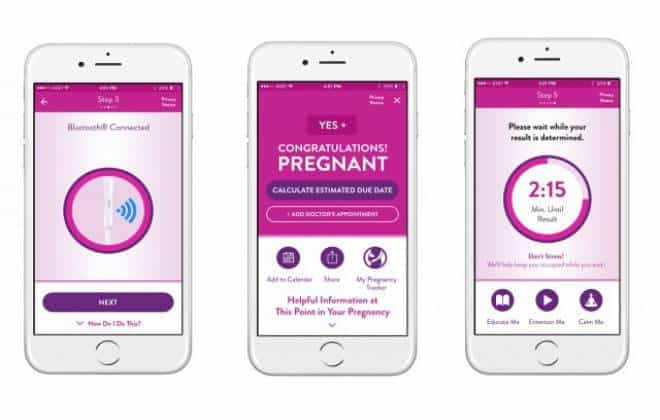
Menstrual cycle apps have become a staple on the phones of millions of women, and for good reason: they organize dates, show patterns, and eliminate the need to manually calculate dates using a calendar. But there's a limitation that needs to be clear from the start: these apps don't do pregnancy test. None of them detect the hCG hormone, which only appears in urine or blood. What they do is make statistical predictions based on what you recorded.
Understanding this difference changes how you use the app for the better. This guide shows how the prediction is calculated, why it's often wrong, what the fertile window really is, how to calculate the estimated due date, and what to look for in the privacy policy before sharing such intimate information as your cycle.
How does the app calculate the forecast?
The basic calculation is simple: the program takes the duration of your last cycles, calculates an average, and projects your next menstruation from there. More elaborate apps give more weight to recent cycles and adjust the estimate as you record symptoms, basal body temperature, or ovulation test results.
The blind spot lies in the origin of the data. If you recorded three cycles, the average comes from three numbers; if you recorded two years, the forecast is much better. And if the cycle is irregular by nature, no amount of data will produce an accurate forecast, because there is no pattern to be found.
It's important to remember that a healthy cycle isn't synonymous with 28 days. Variations between 21 and 35 days are considered normal in adult women, and a difference of a few days from one month to the next is expected. Stress, travel, weight changes, poor sleep, illness, and intense physical activity all affect the cycle—and the app doesn't know any of this unless you record it.
Fertile window: what forecasting can and cannot achieve.
Ovulation usually occurs around 14 days. before The next menstrual period should be calculated from 14 days after the last one, not 14 days after the last one. This inversion is the origin of many errors: in an irregular cycle, it is not known when the next menstruation will be, therefore it is not known when ovulation will occur.
The fertile window considers that sperm can survive for several days in the reproductive tract and that the egg remains viable for about 24 hours. Therefore, apps indicate a range of days, not a single day. This range is a probability estimate—it's neither a green light nor a red light.
Important consequence: The cycling app is not a method of contraception.. Fertility awareness methods require specific training, rigorous daily recording of basal body temperature and observation of cervical mucus, and even then have a significant failure rate in common use. An app that only counts days does not offer this security. Contraception should be decided in consultation with a gynecologist.
What increases the accuracy of the record?
- Basal temperature: measured upon waking, before getting out of bed, with a precision thermometer. It rises a few tenths of a degree after ovulation, which confirms that it has occurred—but confirms it afterward, not before.
- Cervical mucusIt becomes clearer, more elastic, and more abundant closer to ovulation.
- Ovulation testIt detects the peak of the LH hormone in urine, which precedes ovulation by about 24 to 36 hours.
- Consistent recordNoting the first day of bleeding each month is the most important piece of information of all.
Estimated Due Date Calculator
After pregnancy is confirmed, the app becomes useful in another way: it calculates the estimated due date. The classic calculation is Naegele's rule — add 280 days, or 40 weeks, to the first day of the last menstrual period. It's an estimate, and that's why it's called "probable": most births occur within a range of weeks around it.
In irregular cycles, this calculation loses precision, and the reference becomes the first-trimester ultrasound, which estimates gestational age by measuring the embryo. When the two dates diverge, the early ultrasound prevails—and this decision is made by the professional overseeing the prenatal care.
Cycle and fertility apps that are worth the space.
Flo Menstrual Calendar
Notice 4.9 (5.0 million reviews) Available on the Play Store. It's the most comprehensive in educational content and the easiest to keep up-to-date, with quick logging of flow, pain, mood, and symptoms. It has an anonymous mode and allows you to export your history, which is helpful for reference.
Important note: like all apps in this category, it offers a subscription with extra features. The free version already covers the essentials of registration and forecasting.
Clue Menstrual Calendar
Notice 4.7 (1.5 million reviews). The key difference lies in the editorial approach: instead of promising an exact prediction, it shows the range of variation in its cycles and explains the uncertainty. For those with irregular cycles, this honesty is more useful than a fixed date that doesn't materialize.
Menstrual Calendar (Period Tracker)
Notice 4.7 (358.3 thousand reviews). A straightforward, lightweight interface with symptom and mood tracking. It's the choice for those who want the basics done well, without excessive features.
Ovia Cycle & Pregnancy Tracker
Notice 4.5 (81.6k reviews). Designed for those trying to conceive, it accepts basal body temperature, cervical mucus, and ovulation test data, and tracks the pregnancy afterward. The reports are well-organized for presentation to the doctor's office.
Glow Ovulation Tracker
Notice 4.1 (74.1k reviews). It focuses on fertility and community, with forums and trial support. The lowest rating in the group reflects complaints about billing and ads, so it's worth reading recent reviews before subscribing to anything.
Menstrual data privacy
Cycle, pregnancy attempts, and symptoms are health data, classified as sensitive under the General Data Protection Law. This means that processing requires a specific legal basis and that you have the right to access, correct, and delete what has been collected.
Before choosing, look for four answers in the privacy policy and app settings:
- Is there an option to delete the account and all data from within the app itself?
- Is it possible to use it without creating an account, keeping the records only on the device?
- Is the data shared with advertising or analytics partners?
- Is there a password or biometric lock option within the app?
It's also worth reviewing the permissions granted. A cycling app doesn't need access to contacts, calls, or precise location to function.
When to see a doctor
No app can replace a clinical evaluation, and some signs call for a consultation instead of another month of tracking: a missed period with repeated negative tests, cycles that suddenly become very variable, bleeding outside of the period, intense pain that disrupts daily life, absence of menstruation for three months or more, and difficulty getting pregnant after a year of trying — or six months for those over 35.
In these cases, the history you've accumulated in the app becomes a real advantage: take the screenshot of your cycle variations to your appointment. It's exactly the type of information that gynecologists usually ask for, and almost no one has it organized.
Recorded symptoms: what they prove and what they don't prove.
Cycling apps ask you to record dozens of symptoms, and it's worth understanding what that's really for — and where the interpretation goes wrong.
It serves its purpose well:
- Recognizing your own pattern. After a few months, it becomes clear which symptom appears at which stage — and this helps with planning and not finding what is usual strange.
- Bring organized information to the consultation. “Intense cramping for the first two days, for eight months” is much more helpful than “it sometimes hurts”.
- Identify change. What matters clinically is usually the change from the norm, not the absolute value.
- Follow up on treatment, comparing before and after a professionally guided change.
It proves nothing: An isolated symptom does not confirm pregnancy, does not confirm ovulation, and does not diagnose any condition. Early pregnancy symptoms are often confused with premenstrual tension—and it is precisely this confusion that leads to testing too early and receiving a false negative.
Signs that require professional evaluation.
It's worth listing them, without causing alarm, because the app can help you understand—and it's not the app that evaluates:
- Very short, very long, or very irregular cycles persistently.
- Very heavy bleeding, that disrupts your routine, or that lasts much longer than usual for you.
- Bleeding outside of the period, repeatedly.
- Debilitating colic, ...which doesn't give in to what usually solves the problem — pain that prevents working or studying isn't "normal just because it's common.".
- Absence of menstruation for several cycles, outside of pregnancy.
- Difficulty getting pregnant after a period of trying, which varies according to age.
- abrupt change of pattern without apparent cause.
In any of these cases, the app is useful in a specific way: Bring the exported history to the query.. A record of months is worth more than trying to reconstruct dates from memory.
Frequently Asked Questions
Does the app work as a contraceptive method?
No, and that's the most dangerous misconception in the category. Calendar prediction is not a method of contraception. There are methods based on fertility awareness, but they require formal training, rigorous recording of signs, and monitoring—and even then, they have their own failure rate. Contraception is a matter for consultation.
Why is the forecast so wrong in my case?
Because it's an average of your historical data, and the body doesn't follow averages. Irregular cycles, stress, illness, travel, weight changes, and sleep patterns can all shift ovulation—and ovulation is what determines when menstruation would occur.
Do I need to log it every day?
No. The most important record is the first day of each menstruation. The rest helps to identify patterns, and you decide how much you want to track it.
Can I use the app if I'm on birth control?
It can be used as a reminder and to record symptoms — but predicting ovulation becomes meaningless because the method alters the cycle. The bleeding during the pause is not menstruation in the physiological sense.
Is it safe to put this data into the app?
It depends on the app. Menstrual data is a sensitive category under the LGPD (Brazilian General Data Protection Law). It's worth checking if there's an option to keep everything on the device, if you can actually delete the account, and if the policy states that it allows sharing with third parties.
Conclusion
This cycle app predicts dates based on your data, estimates your fertile window, and calculates your due date. It does not detect pregnancy, does not confirm ovulation before it occurs, and is not a contraceptive method. Those who treat the prediction as an estimate can benefit from the tool; those who treat it as certain end up frustrated.
In practice: record the first day of your period every month, use the app to find out when your period is actually late, take a home pregnancy test from that day onwards, and confirm with a beta-hCG test if you still have doubts. And when choosing an app, also consider its privacy policy—because the data you provide is some of the most intimate information there is.
Read too
- Measuring Blood Pressure with Your Cell Phone: Why It Doesn't Work and What to Do
- X-ray via Cell Phone? Why It's Impossible and What Exists
- Photo Permanently Deleted: What Can You Still Do on Your Cell Phone?
- Apps for Making Friends Online: Real Options and Cautions
- Strawberry of Love: Step-by-Step Recipe and How to Avoid Burning Yourself