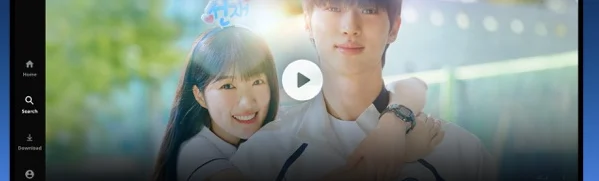
Drama Apps: Why None Have the Complete Catalog
 Put Rodrigo Oliveira
Everyone who enters the world of K-dramas asks the same question in the first week: what's the app that has everything? The answer is uncomfortable, but it's the only honest one — This app does not exist., And it doesn't exist for a structural reason, not because of laziness on the part of the platforms. The license for an Asian series is sold by country, by term, and by platform, and no single service can buy everything.
Understanding how this licensing window works explains almost all the questions of this kind: why the series disappeared, why it's on one app in Brazil and another in Portugal, why the new episode takes so long, and why so many apps from outside the store are promising to solve this. Let's take it one step at a time.
How does a K-drama licensing window work?
When a Korean broadcaster or a Chinese production company finishes a series, it sells the international rights in packages. One buyer gets the rights for Latin America for three years; another gets them for Southeast Asia; another buys only the rights for Korea. Each contract defines the territory, the timeframe, whether dubbing is allowed, and whether offline downloads are permitted.
That's why the same series appears on different services depending on the country, and that's why it disappears when the contract expires. It also explains the episode delay: simultaneous broadcast with Asia is more expensive and, when purchased, becomes a feature of a paid plan.
Drama apps worth installing
Viki (Rakuten)
Viki is the service most dedicated to the genre, featuring Korean, Chinese, Taiwanese, and Thai productions. Its trademark is the subtitles created by a community of volunteers organized within the licensed platform itself, resulting in translations with good cultural context.
In the free version, you watch with ads and have access to part of the catalog. The app has a 4.6 rating and over 1.1 million reviews on Google Play. Ad-free access, the full catalog, early access, and offline download are part of Viki Pass, the paid plan. View on the Play Store.
WeTV
WeTV focuses on Chinese and Thai productions, with a portion dedicated to K-dramas. It has a 3.7 rating and over 600,000 reviews. Part of the catalog opens with ads; the VIP plan allows you to skip episodes and remove the ads.
This is the best practical example of the licensing window: Chinese series currently airing often have simulcast agreements, and that's exactly what the paid plan is selling. View on the Play Store.
iQIYI
One of the largest Asian streaming services, featuring dramas, animation, and variety shows. It has the highest rating in its category on Google Play — 4.8 with nearly 1.5 million reviews — and performs well on modest devices.
The free tier includes ads; the VIP tier unlocks early access, higher resolution, and downloads where the license allows.
Netflix
It's not a K-drama app, but it has acquired many Korean licenses and produces its own series in the genre—which, being original, don't exist on any other service. It's a full subscription, with no free tier, a 4.3 rating, and over 15 million reviews. View on the Play Store.
Offline download is included as per the plan, and the usual rule applies: the downloaded file is protected and can only be opened while the subscription is active.
YouTube (official broadcaster channels)
Asian broadcasters maintain official channels with complete, subtitled series, published by themselves. It's the most underrated free option in the genre and is completely legal, because whoever publishes it owns the rights.
Check the verification badge. A full episode on a personal channel is an unauthorized upload — it usually comes cut, with altered audio to avoid detection, and disappears without warning.
How to find where a specific series is located
Instead of hunting for the ultimate app, reverse the search: look for the title. Use the search function within each app you already have installed, and search for the series name along with the word "watch" to see which services officially appear. It takes less time than testing a new app and carries no risk whatsoever.
If the series doesn't appear on any streaming service in Brazil, the explanation is almost always the same: no one bought the license for this region, or the previous contract expired. It's frustrating, but it's information—and it's much better than assuming the problem is with your phone.
The app that promises to solve everything.
Since fragmentation is a problem, a category of K-drama apps is circulating that isn't on Google Play and is distributed via APK files on websites and messaging groups. They promise exactly what the licensing structure prevents: an entire catalog, ad-free, and free to download.
They can make promises because they don't pay any licensing fees. Distributing and displaying copyrighted work without the owner's authorization is illegal — Law 9.610/1998 deals with copyright and article 184 of the Penal Code addresses infringement. In practical terms, files installed outside of the official app store don't undergo security checks and are the main channel for banking malware on Android. If the K-drama app isn't published in your phone's official app store, that's not a technical detail: it's a warning.
Conclusion
There's no such thing as a "dorama app that has everything" because licenses are sold by country, term, and platform—and that's the same reason why series come and go and change services. Viki, WeTV, iQIYI, Netflix, and the official broadcaster channels on YouTube together cover most of what reaches Brazil.
Install from the official store, starting with the free tier and searching by title, not by app. When something is unavailable, the answer is that no one has purchased the rights for this site—not that there's a hidden shortcut in an APK file.
The Asian calendar determines when the episode arrives.
Anyone who starts watching a series discovers that new episodes don't appear whenever they want, but rather when the original broadcaster airs them. Most Korean productions air on... two episodes per week, on fixed nights, and the service licensed here can only publish after that. Before that, there is no archive.
Add to that the time difference: South Korea is twelve hours ahead of Brasília time. The episode shown there on a Friday night corresponds to the beginning of Friday morning here — and that's why it feels like the episode "leaked" ahead of time in some places and was delayed in others. Nobody delayed anything; the clock is just different.
After the broadcast, there's still the subtitling and publishing stage. When the service has a simultaneous broadcast contract, this takes hours; when it doesn't, it takes days or weeks. This timeframe is exactly what's usually sold in the paid plan—early access is a product, not a favor.
Why does the season end after sixteen episodes and not return?
There's a difference in format that completely changes the expectations of those coming from Western series. A typical Korean production is born as a self-contained story, with the number of episodes defined before filming and the ending written from the beginning. There's no such thing as a "renewal for a second season" as a rule: the series ends because it was planned to end.
This has three practical consequences. The first is that searching for the sequel to a title you loved almost always leads nowhere—and its absence from the app isn't a catalog error. The second is that you can start any series without fear of being stuck with an unfinished plot. The third is that, when a sequel exists, it's usually treated as a new work, with a different title and a separately negotiated license, meaning it might be on another service.
What to do when a series is removed from the catalog?
Title deeds being dropped are routine, not exceptional. The contract has a deadline, and when it expires the work disappears even if no one has complained about anything. What can be done:
- Please note the exit sign. Services typically mark the title's record with an expiration date when the license is about to expire. That's the only warning you'll receive.
- Finish what you started. Given the warning, prioritize the ongoing series instead of starting another. Twenty episodes take less time than waiting for a new license that may never come.
- Don't trust the wish list. She holds the right to her own interest, not the right to display it. A saved title disappears anyway.
- Check if it has migrated. Work that is removed from one service often reappears in another weeks later, because whoever purchased the subsequent license is different.
- Remember the downloaded file. The download made within the application expires along with the license. It does not become a copy of yours.
How to manage multiple services without becoming dependent on any one of them.
Since no single app has everything, the solution is to organize your usage instead of subscribing to everything at once. One method that works:
- Keep the services with the free tier installed. And watch it with ads every day. It's that advertising that pays for the license of what you're watching for free — and that's why the free tier exists.
- Gather three to five series that are only available on a paid service. Before signing. Signing just for a single title is the least profitable expense.
- Subscribe by cycles. Billing is monthly, and canceling doesn't cut anything off immediately: you continue using it until the paid cycle ends. Binge-watching for a month and then resuming later is perfectly legitimate and costs a fraction of the entire year.
- Review the subscriptions in your app store account. All recurring charges are displayed there, along with the next due date and a cancel button. This is also where forgotten subscriptions appear.
- Note where each series is located. A simple note on your phone prevents you from reinstalling app after app every time you remember a title.
The limitations that no K-drama app can solve.
- It doesn't anticipate what hasn't been shown yet. A non-existent episode is not hidden in any plan.
- It does not guarantee Portuguese subtitles for the entire catalog. Translation services are also contracted by title, and older works are usually the first to be offered without one.
- It doesn't hold the title in the air. No feature of the app is more powerful than the contract's expiration date.
- It does not deliver a stable catalog. Today's list is not the same as the one for six months from now, and that applies to the paid plan as well.
It's worth repeating the point that concludes the matter: the app that promises to solve all these problems, distributed as a file outside the official store, can only promise them because it hasn't paid any licensing fees. It's not a better service—it's content published without authorization running on an app that nobody has reviewed, and which is why it's the main route for malicious programs on mobile phones. Don't install it.
Frequently Asked Questions
Why does it take so long for the new episode to appear here?
Because it can only be published after it airs in its country of origin, and then it still needs to be subtitled. When the service purchased simultaneous broadcast rights, this takes hours; without that contract, it takes much longer.
Does subscribing to a plan unlock the entire app catalog?
It only unlocks what that service has licensed for Brazil. No plan grants access to works that the company hasn't purchased for our territory—and it's common for the same app to have different catalogs in different countries.
Is it okay to maintain multiple subscriptions at the same time?
Rarely. Because the license rotates, the same money yields more in alternating cycles: one month on each service, with the free tier covering the intervals. The annual cost drops significantly, and you don't lose anything relevant.
How do I know when the series will be removed from the catalog?
The availability notification appears on the title's page when the service displays it. Otherwise, there's no notification: the work simply disappears from search results overnight.
Is there a legal way to watch a series that hasn't aired in Brazil?
If no one has licensed the title here, there's no legal way to watch it here — and forcing the issue through other means won't change that. What usually works is waiting: the Brazilian dorama market has grown, and older works frequently enter catalogs.
Read too
- Pregnancy Test: Why No App Replaces the Exam
- Free or Paid K-Drama Apps: What Changes Between Each Plan
- Offline K-Drama Downloads: Which Apps Allow Downloads and Which Plans Are Available?
- Movie App: How Much Does Each Catalog Cost?
- Free Movie Apps: Why Does the Catalog Change Country?
- Mexican Soap Operas on YouTube: Official Channel x Pirated Upload