Where to Watch Mexican Soap Operas: The Licensed Services
 Put Rodrigo Oliveira
Anyone wanting to watch Mexican telenovelas on their phone quickly discovers that the problem isn't a lack of apps—it's a lack of licenses. The major productions from Televisa and TelevisaUnivision are sold by territory, and the Brazilian market isn't always included. Therefore, before searching for "the telenovela app," it's worth understanding... where this content is officially licensed and how to recognize an official channel.
This guide shows the legal avenues that exist today, explains why many classic telenovelas only appear in Spanish, teaches how to differentiate between official channels and unauthorized uploads, and makes it clear why apps offering "complete telenovelas" distributed outside of app stores are a problem, not a solution.
Why is it difficult to find dubbed Mexican soap operas?
Dubbing costs money and is contracted by territory. A Mexican telenovela only gets a Portuguese version if a Brazilian broadcaster or service buys the rights to air it. It is deciding to invest in dubbing. That's what happened in the 1990s and 2000s, when Brazilian broadcast television channels bought several titles — and that's why the dubbed soap operas that are currently circulating are precisely those from that period.
Recent productions follow a different path: they are distributed in Spanish for the Hispanic market, which is much larger. Brazil, when it's included, usually offers subtitles. This isn't a flaw in any app—it's simply the economics of the business.
Where are Latin American soap operas licensed?
ViX
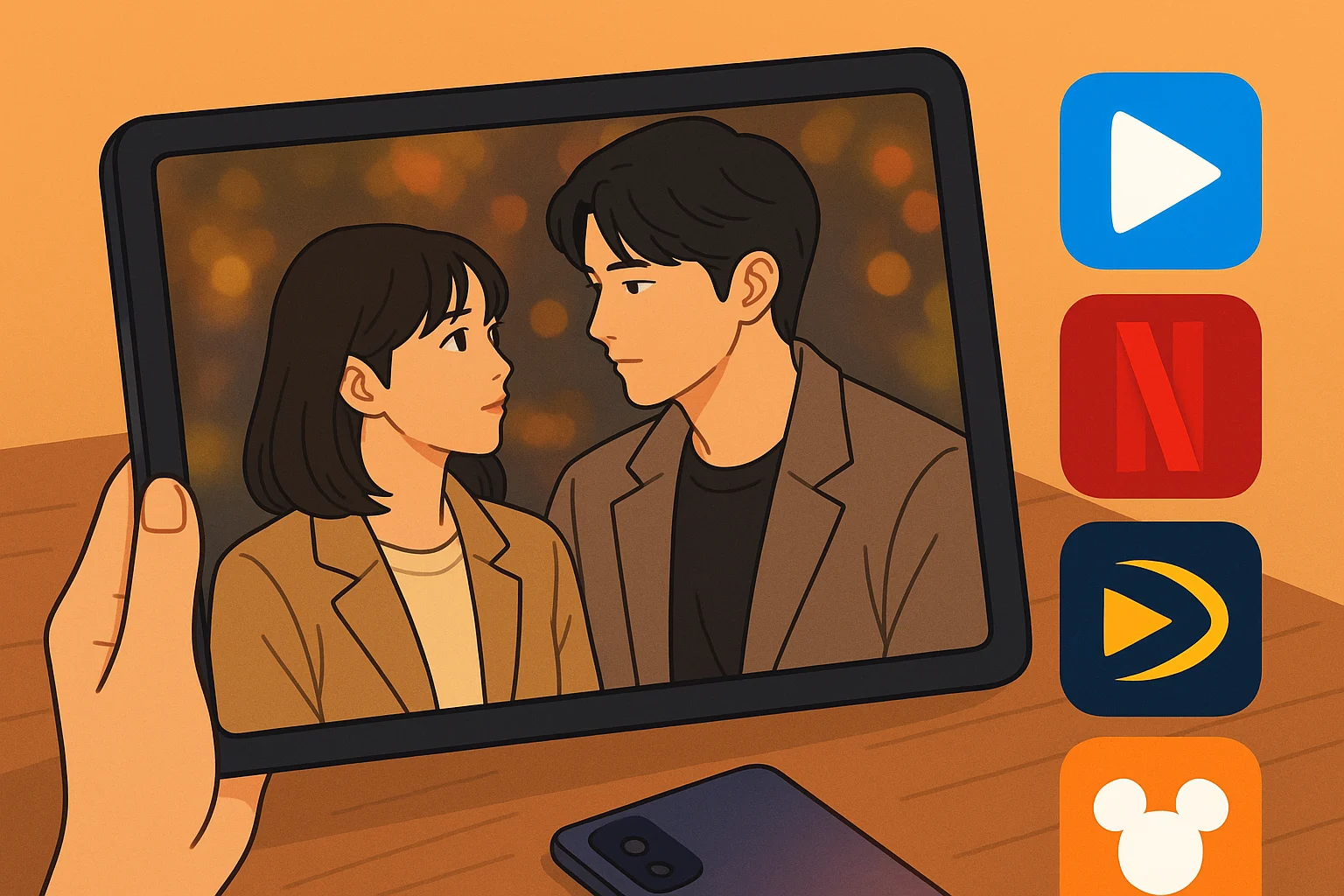
ViX is a service from TelevisaUnivision and has the largest catalog. of Mexican soap operas From around the world, including Televisa classics. It has a free, ad-supported tier and paid plans. The app is on Google Play with a 4.0 rating and over 700,000 reviews.
Important note: the service is aimed at a Hispanic audience, and both the interface and audio are in Spanish. Availability also varies by country — check the app store to see if it appears for your account before using it.
Official broadcaster channels on YouTube
Latin American broadcasters and production companies maintain official YouTube channels with complete episodes, compilations, and entire telenovelas published by themselves. It's free, it's legal, and in many cases, it's the only way to watch certain older titles.
The criteria for recognizing an official channel are the verification badge and the broadcaster's name. If the channel has a generic name, publishes episodes with stretched images and titles in capital letters, it is an unauthorized upload.
Globoplay and subscription services
Brazilian subscription services occasionally license Latin American telenovelas, and Globoplay maintains an open, ad-supported section without a subscription fee for part of its catalog. It has a 4.6 rating and over 1.5 million reviews on the Play Store.
Since these contracts come and go, the most practical thing to do is search for the soap opera's name within the app instead of assuming the catalog is fixed.
Netflix
Netflix has acquired the rights to several Latin American productions and produces its own telenovelas in that format. It's a full subscription service, with no free tier, and has a 4.3 rating and over 15 million reviews.
Here, the chance of finding Portuguese dubbing is higher because the platform dubs what it licenses for the Brazilian market. Check the audio options for each title.
How to recognize a chapter published without authorization
- The channel has no verification badge and the name does not correspond to any known broadcaster.
- The image is stretched, mirrored, or has borders — tricks used to evade automatic copyright detection.
- The audio has an altered tone or background music on top, for the same reason.
- The playlist has missing chapters or chapters out of order because some have already been removed.
Watching through these sources doesn't usually lead to legal action for those who only watch, but those who publish are breaking the law — and the practical result for you is the soap opera disappearing mid-season.
The apps that promise "all the soap operas"“
There's a wave of telenovela apps that aren't on Google Play and are circulating as APK files, distributed through websites and messaging groups. They compile chapters scraped from various sources and promise a complete catalog, dubbed and ad-free.
They promise things because they haven't paid anyone anything. Distributing and displaying copyrighted work without the owner's authorization is illegal in Brazil — Law 9.610/1998 deals with copyright and article 184 of the Penal Code deals with infringement. And, technically, files installed outside the app store don't undergo security review: they are the main vehicle for banking malware on Android. No soap opera episode is worth that kind of exchange.
Common questions
Why is almost everything in Spanish?
Because dubbing into Portuguese only happens when someone buys the rights for Brazil and decides to invest in it. The Hispanic market is much larger and receives the content in its original language.
Is there a free Mexican soap opera app?
There is a free, ad-supported tier on ViX, and there are official broadcaster channels on YouTube. What doesn't exist is a complete, dubbed, and ad-free catalog for free.
Why did the soap opera disappear halfway through?
Either the license expired, in the case of an official service, or the chapters were uploaded without authorization and were removed.
Can I download and watch it offline?
Only on paid plans of licensed services, and only when the contract authorizes the download of that title.
How can you tell if a YouTube channel is official?
Based on the verification badge and the name of the broadcaster or production company. The official channel also keeps the playlist complete and in order.
Conclusion
To watch Mexican telenovelas on your cell phone, the legal options are ViX, the official broadcaster channels on YouTube, the Globoplay free-to-air streaming platform, and subscription services that license Latin American titles. A large portion of the content will be in Spanish, and this is due to the economics of dubbing, not the app itself.
Always install from your phone's official app store and be wary of any app that promises the complete, dubbed catalog for free. It hasn't purchased any licenses—and the price you pay will appear later.
The cost of an entire soap opera: chapters, hours, and pacing.
It's important to consider the scope of the commitment before starting. A Latin American telenovela typically has between one hundred and two hundred episodes of about forty-five minutes each. That amounts to between seventy and one hundred and fifty hours of screen time—more than ten seasons of a short series. It's not a weekend; it's a project that takes months.
Two choices greatly change this experience. The first is to turn off autoplay: the chapter that automatically plays is what makes someone fall asleep with their phone on, wasting data and battery all night. The second is to use the "resume where you left off" feature, which every service offers—writing down the chapter number by hand is the quickest way to lose track after a week without watching.
One technical detail that helps those with limited internet: soap operas are spoken content, with a static camera and little scene movement. This type of image compresses much better than sports or action, so medium quality already delivers a comfortable result on a mobile phone screen. Increasing to the maximum resolution here consumes significantly more data and makes little difference.
Watching in Spanish without knowing Spanish
Since a large portion of the content is in its original language, the most useful resource isn't dubbing—it's subtitles. On video platforms, in addition to the subtitles sent by the channel, there are subtitles automatically generated from the audio, and these can be translated into Portuguese within the player itself, in the video settings.
It works, with some caveats that are best understood beforehand:
- He almost always gets his proper name wrong. Speech recognition replaces character names with similar-sounding common words.
- The high trail is a hindrance. A scene with loud background music undermines the accuracy of the recognition, and that's precisely the dramatic scene.
- Slang and regionalisms disappear. Automatic translation delivers the literal meaning, not the tone.
- It doesn't exist in every video. Automatic captioning depends on the platform recognizing the language in that file.
Two crutches that help more than they seem: reduce the playback speed to seventy-five percent in the first few chapters, until your ear adjusts, and accept that soap opera Spanish is spoken slowly and with repetitive vocabulary. After a few chapters, most people stop looking at the subtitles without realizing it.
Why isn't chapter 47 in the playlist?
Numbering errors are the most frequent complaint from those who watch soap operas on video platforms, and they have different causes:
- Block publishing. The channel uploads one batch of chapters at a time, and the list remains incomplete until the next batch.
- Chapter removed. A segment containing music or images from a third party may be blocked, and the entire episode may be taken down because of two minutes.
- Different numbering. The original broadcast is divided into daily chapters; the international version is usually re-edited into longer episodes. One hundred and twenty become eighty, and the math never adds up.
- Third playlist. A list compiled by a random user mixes sources and loses the chapters that were removed from each of them.
The practical solution is to follow the playlist published by the broadcaster's or production company's own channel. It's the only one that reflects what has actually been licensed — and if an episode is missing from there, it probably hasn't been released and won't be legally available anywhere.
Why is today's version different from the one that aired on TV?
Those who watched the telenovela when it premiered sometimes find the digital rerun strange, and that impression is correct. The soundtrack is usually licensed only for the original broadcast: when the work is republished years later, the songs that were not renegotiated are replaced with archival music. Memorable scenes reappear with a different sound.
There's also the re-editing: commercial breaks disappear, cliffhangers are cut, and the length of each episode shrinks. And there's the framing—material recorded on a square screen, when adapted for widescreen, loses top and bottom bars, or gains sidebars. None of this is a flaw in the application; it's the work being re-edited for another distribution format.
The limits of the Latin American collection in Brazil
- Old dubbing is lost. The Portuguese-language track, produced by a broadcaster in the 1990s, belongs to whoever commissioned it. If the current service only licensed the work, it will broadcast it in Spanish even if the dubbing exists in some file.
- Not everything was sold here. Many titles never had a distributor in Brazil, and there's no app that can solve that.
- The catalog is constantly changing. The contract expires, and the storyline that was there last month may not be there today. This applies to both the free and paid tiers.
- The free tier contains ads. It's the advertising that pays for the license. A service without advertising, without subscriptions, and with a complete catalog has nowhere to get the money to license anything — and an app distributed outside the official store, promising just that, is exactly the case.
Questions remain regarding the Latin collection.
Can automatic subtitling cover an entire telenovela?
Yes, you can follow the plot, but she gets names wrong and misses jokes and slang. When the channel publishes its own subtitles, always prefer that option: they were written by someone, not generated by speech recognition.
Why isn't the music from the old chapter the one I remember?
Because the soundtrack was only licensed for the original broadcast. In re-releases, what wasn't renegotiated is replaced with archived music. This happens with soap operas, series, and talk shows.
Can you play the chapter from your phone on the TV?
Official apps have this feature when the TV is on the same network, and it's the recommended way to binge-watch – it saves phone battery and improves the experience. Unofficial services usually don't have this feature because it depends on integration with the TV platform.
Is it worth watching the condensed version with longer episodes?
If your time is short, it's worth it: the re-edited version cuts out repeated plot points and significantly reduces the total running time. Those who want the original experience, with its daily pacing, should look for the version in chapters published by the network.
How can I keep up with a soap opera that's currently airing?
By the service that holds the rights in Brazil, when it exists, respecting the broadcast schedule of the country of origin. A "chapter of the day" on an unofficial channel is an unauthorized upload and is taken down — usually in the middle of the plot, which is when it hurts the most.
Read too
- Free Asian Movies: Where to Watch with Reliable Subtitles
- Offline K-Drama Downloads: Which Apps Allow Downloads and Which Plans Are Available?
- Old Football Games: Where to Find the Legal and Free Collection?
- Free Japanese Movies: Where Are Anime and Real Cinema?
- Asian Films on Mobile Phones: What Defines Image Quality