Live Football on Mobile: Who Has the Rights to Each Game
 Put Rodrigo Oliveira
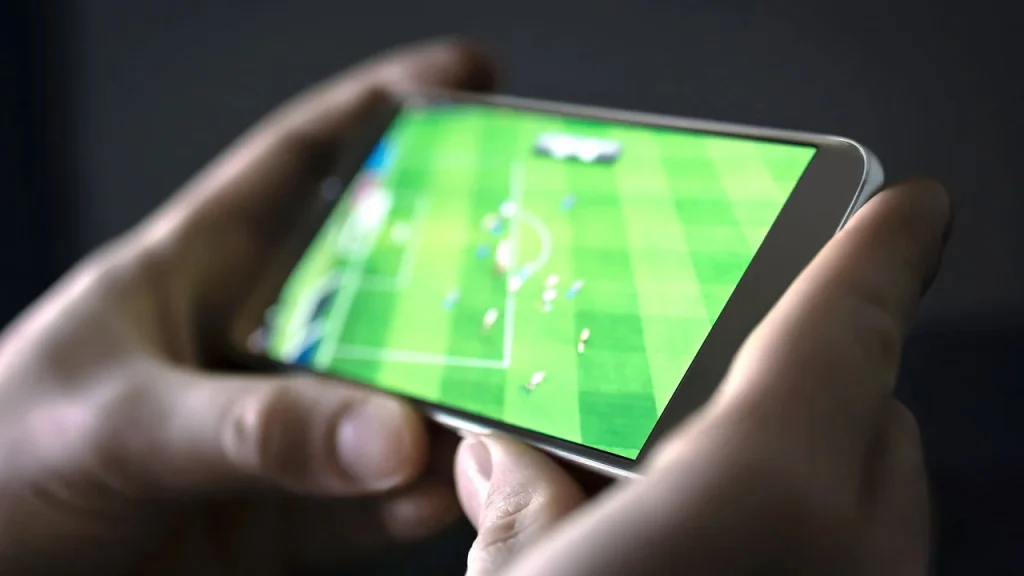
Watching live football on your mobile phone is simple from a technical point of view, but complicated from a contractual point of view. The right question is never "which is the best app," but rather Who has the right to the competition that I want to see?. Each tournament is sold separately, by country, and that—not the quality of the app—determines where the game is broadcast.
This guide organizes the subject according to this logic: first, how the rights market works; then, the types of applications that exist and what each can legally deliver; finally, how to find out in minutes who is broadcasting the championship you follow, without relying on outdated lists.
Who decides where the game goes?
The league or federation that organizes the competition owns the signal. It sells pre-cut packages for territory, by window — live, highlights, replay, archive — and by platform — Free-to-air TV, pay TV, streaming. Each buyer gains exclusivity over their chosen program, in that country, for a specified period.
Three practical consequences: contracts change hands every cycle, so the list of apps ages quickly; the same championship is broadcast on different channels depending on the country; and no legal service can offer "all the games" because nobody bought them all.
The four types of football apps
1. Free-to-air TV broadcaster apps
They are the most solid free layer. Broadcasters that buy football packages usually broadcast games on free-to-air television because the advertising reach compensates for the investment — and they deliver that same signal to mobile phones through their own apps.
How to identify the right app: search for the broadcaster's name in your phone's official app store and check the developer before installing. Apps from broadcasters published by third parties are not official and should not be installed.
The limit is clear and honest: you see what that broadcaster bought, and that's it. None of them have all the championships.
2. Channels that bought the rights and broadcast for free.
A model that has become established in Brazil in recent years: a channel acquires the rights to a competition and broadcasts it for free on a video platform, supported by advertising. CazéTV on YouTube is the best-known example.
Don't confuse this with pirated retransmission. A legitimate channel is verified, announces the competition weeks in advance, has a published schedule, and displays sponsorship. A broadcast that appears minutes before the whistle, on a channel with no history, is a stolen signal.
It's truly free and legal — for the same reason as broadcast TV: someone paid for the rights and gets their money back through advertising.
3. Subscription services
These are the channels that concentrate the majority of the games, because they buy the most expensive packages — precisely the ones that free-to-air TV doesn't offer. Globoplay is the most direct Brazilian example: it maintains an open advertising block and places live channels and sports content in the higher-tier plans. The app has a 4.6 rating and more than 1.5 million reviews on Google Play.
A word of caution regarding outdated lists: sports streaming services are frequently reorganized, and some names that appear in articles from years ago have either been discontinued or merged into other platforms. Before subscribing based on a recommendation, check the app store to see if the service is still available.
The practical advantage of a subscription is predictability: you know where the game will be broadcast. The disadvantage is the total cost when the championships you're interested in are spread across different services.
4. Tracking apps, without streaming.
They provide live scores, lineups, statistics, goal alerts, and news, but do not transmit video. For those who are at work, commuting, or have a small data plan, they meet most needs with minimal data consumption.
Choose based on the developer and reviews, and be wary of anyone who promises "watch" in the title and redirects to third-party links — it's the most common disguise for a pirate aggregator.
How to find out who is broadcasting your championship
- Open the official website of the competition. Leagues and federations publish the list of rights holders by country.
- Check out schedule announced by the broadcasters They announce it in advance the week of the game.
- See the official channels of your clubThey let you know where the match will be played.
- Be wary of any source that claims the game is available "on a free app" without naming the copyright holder.
Why avoid aggregators from outside the store?
Applications distributed via APK files that promise "all channels" work by scraping pay-TV signals and retransmitting them without authorization. This is a crime under Article 184 of the Penal Code, and Law 9.610/1998 addresses copyright infringement.
The immediate risk, however, is different: files installed outside the app store don't undergo security checks and are the main vehicle for banking trojans on Android — the kind that requests accessibility permissions and then captures passwords and authentication codes. Many also run invisible advertising in the background, consuming battery and data with the screen off.
Features that make a difference on game day.
Besides the streaming itself, some features significantly change the experience and often go unnoticed when choosing. The first is... configurable alertYou can receive notifications only about your team, only about goals, or only about the start of the match, instead of being interrupted at every play of any game.
The second one is TV broadcast. Official apps support Chromecast and equivalent features, allowing you to start on your phone and stream to the big screen. Unauthorized aggregators often fail precisely there, because the signal they serve doesn't pass the verification of official protocols.
The third one is the data consumption, ...which almost nobody calculates beforehand. A two-hour game at medium quality uses close to 2 GB; at Full HD, it can exceed 6 GB. All official apps have a separate quality adjustment for Wi-Fi and mobile data in their settings — leaving it in power saving mode away from home is what most stretches a small data plan.
Finally, the transmission delay. Streaming always arrives a few seconds after the TV broadcast, which explains why you hear your neighbor's shout before the goal appears on your screen. It's not a problem with the app or your internet: it's the processing and distribution time of the signal.
How to find out where the game is being broadcast, without relying on guesswork.
Broadcast contracts change every cycle, so the correct answer today may be wrong next season. The method, however, remains the same:
- Start by visiting the official competition website. Confederations and leagues publish the table with the rights holders for each match — it is the primary source and the only one that does not become outdated.
- Check out the club's website., which usually announces where the game will be broadcast.
- Use the app's own search function. From the broadcaster or service: if the game is there, it appears in the programming.
- Check the schedule for free-to-air TV. for matches requiring free-to-air broadcast.
- Be wary of "where to watch" lists on random websites. A large part of it exists to lead to the use of irregular applications.
One observation that avoids recurring frustration: The same championship can have games on different platforms in the same round., Because the rights are divided by match and by home field advantage. It's not a problem with the app.
What to do when there is no legal transmission available?
It happens, and it's worth being honest about the real alternatives:
- Follow in real time without image. — live score apps with text commentary, statistics, lineups, and play-by-play updates. It's free, uses very little data, and is perfect for those who just want to know what's happening.
- Radio, via the broadcaster's app. Live commentary, great, and with very low data consumption.
- Best moments later, officially published by the holder.
- Watching in a public place that includes the package, which is the traditional route and remains valid.
- Subscribe for one month And cancel later, when the game really matters. Many services allow monthly subscriptions without a commitment period.
Questions that arise later
Why isn't my team's game being shown anywhere?
Because not every match is sold for broadcast. In several competitions, matches in a round with many simultaneous confrontations are left without live broadcast — and that's a business decision, not a technical failure.
Is a betting app that "streams" the game legal?
Some betting sites license live streaming for their clients, and in that case it's legal. The point to note is something else: you're entering a betting environment to watch football, with all that that implies.
Is it possible to watch it for free and legally?
Yes, it works in cases where there is an open signal or where the holder offers a free tier. Otherwise, live streaming of major championships is a paid product — and any app that promises otherwise is retransmitting the signal without authorization.
What if I'm outside of Brazil?
The rights are territorial, so the service you subscribe to here may not work there — and vice versa. Some license holders offer their own international product, which is the regular way.
How much internet data does it use to watch a game?
A full match in high quality consumes several gigabytes; in standard quality, much less. It's worth adjusting the quality for mobile network before the game and, if possible, watching on Wi-Fi.
Frequently Asked Questions
Is there a free app that streams all games?
No, and it cannot legally exist. The right is sold by territory, window, and platform, and no single buyer gets it all.
Why did the championship change channels?
Because contracts are cyclical and go up for auction from time to time. That's also why old app lists become outdated so quickly.
Is streaming on YouTube reliable?
When the channel is verified, announced the competition in advance, and displays sponsorship, then yes — it bought the rights. A broadcast that appears minutes before the whistle on a channel with no history of coverage, then no.
Is it worth subscribing to more than one service?
It depends on how many championships you follow. Since there's no loyalty program, many people only subscribe during the months when the competition they're interested in is taking place.
Is it safe to install an app from outside the store just for a game?
No. These files do not undergo security review and are the main channel for banking trojans on Android. The risk continues after the game ends.
Conclusion
There is no single best live football app; it's the app from whoever bought the rights to the championship you're following. Apps from free-to-air TV channels and channels that broadcast for free with advertising cover the free portion; subscription services handle the rest; and streaming apps are a good option when you can't watch live.
Before installing anything from a list, check two things: who holds the rights for that period and whether the app is still published in the official store. That's what separates a good recommendation from an outdated article.
And it's worth repeating the essential point: if an app promises all games, from all competitions, for free, it hasn't found a shortcut—it hasn't paid anyone. Stick with what's in your phone's official app store.
Read too
- Soccer on your mobile phone: How much internet data does each match use?
- Recording a Soccer Game on Your Cell Phone: What You Can and Can't Do
- 2024 Olympic Games: Where Are the Archives and Who Has the Rights?
- Free or Paid K-Drama Apps: What Changes Between Each Plan
- Watch Movies Online for Free: How Much Internet Data Does Each Hour Spend?
- Old Football Games: Where to Find the Legal and Free Collection?