Looking up a license plate is useful and legitimate: before buying a used car, you can find out the model, year, theft and robbery status, restrictions, and outstanding debts. What many people don't know is where the license plate number is located. Public consultation reveals this information. vehicle data — never the owner's name, CPF (Brazilian tax identification number), address, or phone number. This information is personal data protected by the General Data Protection Law, and the app that promises to deliver it is either lying or operating illegally.
This guide shows exactly what each official channel says, how to do a free check, what paid vehicle history services add, and which promises indicate a scam. In the end, you'll know how to check a car before closing a deal without falling for apps that only want your data.
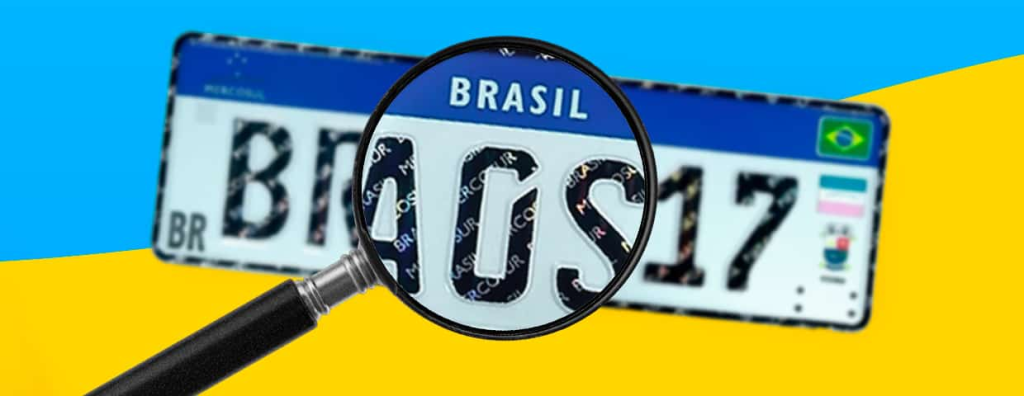
What a license plate lookup shows — and what it doesn't show.
Through official channels, a license plate lookup usually returns the make and model, year of manufacture and model year, color, category, municipality and state of registration, vehicle status, indication of a theft or robbery report, and the existence of administrative or financial restrictions, such as a lien. State channels also show outstanding IPVA (vehicle property tax), licensing fees, and fines.
What no The following information does not appear on any public channel: full name of the owner, CPF or CNPJ number, address, telephone number, email address, and history of owners with identification. This data exists in official databases, but access is restricted to authorities and situations provided for by law. Disclosing it to third parties constitutes irregular processing of personal data.
Therefore, the promise to "discover the license plate owner" is the clearest sign that something is wrong. Those who advertise this usually want you to pay for a report that never arrives, install an app with excessive permissions, or provide your own information in a form.
The official and free channels
Sinesp Citizen
Application from the Ministry of Justice and Public Security, available at Play Store. This allows you to look up a license plate and check if there's a registered theft or robbery report, in addition to basic vehicle information. It's the first check to do when looking at any used car ad, and it takes seconds.
Brazilian driver's license, from Serpro.
It is the official app that succeeded the Digital Traffic Wallet. According to its own description on Play Store, This platform combines digital driver's licenses and vehicle registration certificates, the process for obtaining a first driver's license, and information on traffic violations and vehicles. For the owner, it's the most complete channel: it shows the car's document, traffic violations, and licensing status.
Detran (traffic department) of your state.
Each state's Department of Motor Vehicles (Detran) maintains its own online database, where state debts appear: vehicle tax (IPVA), licensing fees, fines, and, in some states, auction and accident status. Some require only the license plate number; others also ask for the vehicle's registration number (Renavam), precisely to limit mass inquiries. Access is via the agency's website or the state's official app.
gov.br portal
With account login gov.br, Through this app, the owner can access traffic services, check their driver's license points, and track processes. It's the go-to place for anyone seeking complete information about their vehicle.
Paid vehicle history services
There are companies that sell vehicle history reports consolidating official and private databases: auction records, evidence of total loss claims, mileage history reported in maintenance checks, financial liens, and insurance history. This is legitimate information and may be worth the price before a high-value purchase.
Nevertheless, the serious report includes data from vehicle. If the service advertises owner identification, it's time to be suspicious. Before paying, check the company's CNPJ (Brazilian tax ID), customer service channels, reputation on public complaint platforms, and whether the website displays a sample of the delivered report.
How to check a used car step by step
- Ask the seller for the license plate and vehicle registration number (Renavam) before viewing the car. Refusal to provide this information is already an answer.
- Check for theft and robbery information on Sinesp Cidadão.
- Check for outstanding debts and restrictions on the website of the Department of Motor Vehicles (Detran) for the state where the vehicle is registered.
- Check if the data matches the document: chassis, engine, color, and year.
- Consider a vehicle history report if the purchase price justifies it.
- Have a precautionary inspection carried out by an accredited company, which assesses the structure, numbering, and signs of tampering.
- Only transfer the funds after verifying the documentation and ownership with the seller present.
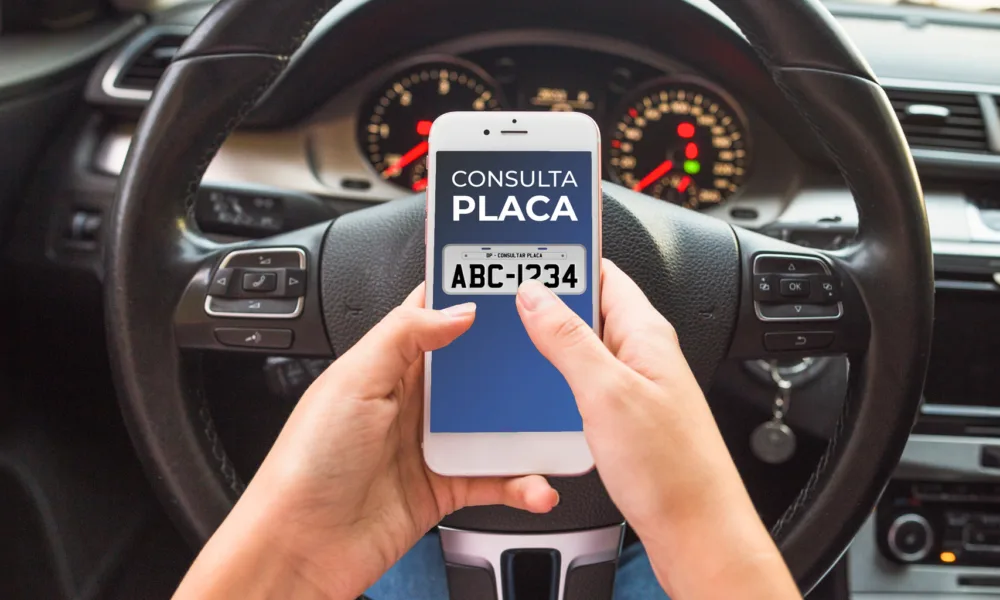
Signs of a scam app or website
- It promises the owner's name, CPF (Brazilian tax identification number), address, or phone number.
- It displays a blurry result and charges for developing it.
- It requests permission from contacts, SMS, calls, or location to look up a license plate.
- It will ask for your CPF (Brazilian tax identification number) or a selfie with an ID to "release the consultation".
- Only accepts Pix payments for personal key accounts.
- It advertises "unlimited lifetime consultations" for a symbolic price.
Is the license plate personal information?
On its own, a license plate identifies an asset. Combined with other information, it can lead to a person—which is why cross-referencing license plates with the owner's identity is treated with restriction. In practice, the effect for the citizen is this: checking a vehicle's status is free; finding out who the owner is, is not.
If you need to identify the person responsible for a vehicle—in the case of a hit-and-run accident, damage to your car, or a traffic violation—the process is through the police report and the administrative procedure. The authorities have legal access to this database; a store app does not.
What each official channel delivers, in practice.
It's worth knowing this before you start searching, because each one answers a different question and none of them covers everything:
- Public consultation by license plate and chassis number. — Vehicle status, administrative and judicial restrictions, indication of theft or robbery, outstanding debt. This is what matters before buying.
- State Department of Motor Vehicles — fines, associated points, licensing, IPVA (Brazilian vehicle tax), and transfer history at the state level. Each state has its own service, and that's where the most complete information about a local vehicle can be found.
- Digital driver's license — vehicle registration document in digital format, valid for inspection, and driver's license. This is for current owners only, not for checking on third-party vehicles.
- Federal government services portal — It brings together access to several of these services with a single login.
They are all free. If a website charges to show theft or debt information, it is reselling public information — and sometimes reselling outdated information.
Paid vehicle history: what does it actually add?
There are legitimate paid services, and it's worth knowing what justifies the cost:
- Claim and total loss registration Information provided by insurance companies — the most relevant data, and the one that does not appear in the public consultation.
- Auction history, including when the vehicle was recovered and put back into service.
- Mileage log used in inspections and reviews, which allows for the detection of tampered odometers.
- Passing through different states, Useful for identifying vehicles with a history in another state.
- Recall pending From the manufacturer.
What do these services no They don't deliver, no matter what the advertising suggests: the owner's name, CPF (Brazilian tax identification number), address, or phone number. Whoever promises this is offering protected personal data — and it's worth being suspicious of everything else that the service claims.
Why is the owner's data protected?
The license plate identifies a vehicle, but it is linked to a person — and therefore the set is treated as... personal data According to the General Data Protection Law, checking the status of an asset is one thing; obtaining the identity of the owner is another.
Access to owner identification information exists, but it is restricted to those with legitimate and foreseen purposes: traffic authorities, police authorities, the judiciary, and, in specific situations, insurance companies. This information is not freely available, and this is not due to a lack of technology.
This explains two practical facts:
- Who hit your car and fled? It can't be found through an app. The way to do it is by filing a police report with the license plate number—the authorities have access to it, but you don't.
- Who parked in your garage? No, that's not the case either. The way to proceed is through municipal inspection or by filing a police report.
How to check a used car without relying on an app.
- Check that the license plate, chassis number, and engine number match. between themselves and with the document. Disagreement ends the negotiation.
- Check the status through the official channel., with license plate and chassis — not just the license plate.
- Check for outstanding debts and fines. The debt is registered at the Department of Motor Vehicles (Detran) in the state where the vehicle is registered. The debt follows the vehicle, not the seller.
- Recall check pending on the manufacturer's website, using the chassis number.
- Conduct an inspection at an independent company. This is the only step that identifies the retrieved structure, and no database can replace it.
- Confirm who the seller is. And if he is listed as the owner on the document. A sale by a third party without a power of attorney is a warning sign.
Conclusion
Checking the license plate is a valuable tool for anyone buying a used car, and official channels provide the necessary information for free: theft and robbery status, vehicle data, restrictions, and outstanding debts. Sinesp Cidadão, the Serpro app, the state Detran (traffic department), and the gov.br portal cover almost everything.
What no legitimate channel provides is the owner's identity. Keep this phrase in mind as a filter: if the app promises the owner's name, it won't deliver—and the only data that will change hands on that screen is yours.
Read too
- Satellite Maps: How to Determine the Age of the Image You See
- Pregnancy Apps: What They Track and What Only Prenatal Care Reveals
- What Will Your Baby Look Like? What Genetics Says and What the App Does
- Apps That Warn You About Speed Cameras: How to Use Them to Drive Safely
- Photo editing apps: collage, watermarking, and image usage.
- Photo editing apps: what are presets, RAW files, and the limitations of your phone?